Barcode scanners
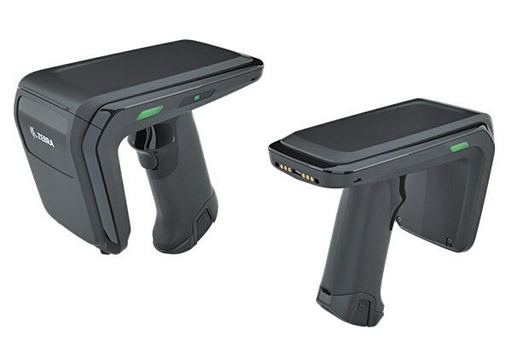
Zebra RFD40
The RFD40: the UHF RFID sled that turns your Zebra terminal into a portable RFID reader.
The Zebra RFD40 attaches to the underside of a Zebra mobile terminal (TC2x, TC5x, TC7x, EC5x, etc.) via an adapter and reads up to 1,300 tags per second at standard range. Replaceable battery; Premium and Premium Plus versions (Bluetooth, Wi-Fi 6, NFC).
For stock-taking, searching for items and checking deliveries.
- UHF RFID, up to 1,300 tags per second
- Compatible with TC2x/TC5x/TC7x terminals
- Replaceable battery
- Premium or Premium Plus (Bluetooth, Wi-Fi 6)
- Circular antenna
Choose the right reference Zebra RFD40
Ask the assistant to help me choose the right reference for Zebra RFD405 versions available. Filter by criteria to find the exact reference.
| Reference | Availability | Price excl. VAT | |
|---|---|---|---|
|
RFD4030-G00B700-E8
Zebra RFID reader RFD40, connection: Bluetooth (cordless), range: Standard, range: Standard.
|
Available on order Delivery in 2 to 3 days | 923.00 € | Choose |
|
RFD4031-G00B700-WR
Zebra RFID reader RFD40, connection: Bluetooth (cordless) + Wi-Fi, range: Standard, range: Standard.
|
Limited stock Delivery in 2 to 3 days | 1,178.00 € | Choose |
|
RFD4031-G00B700-E8
Zebra RFID reader RFD40, connection: Bluetooth (cordless) + Wi-Fi, range: Standard, range: Standard.
|
Available on order Delivery in 2 to 3 days | 1,178.00 € | Choose |
|
RFD4031-G10B700-WR
Zebra RFID reader RFD40, connection: Bluetooth (cordless), range: Standard, range: Standard.
|
In stock Delivery in 2 to 3 days | 1,326.00 € | Choose |
|
RFD4031-G10B700-E8
Zebra RFID reader RFD40, imager SE4100, connection: Bluetooth (cordless) + Wi-Fi, range: Standard, range: Standard.
|
Available on order Delivery in 2 to 3 days | 1,326.00 € | Choose |
Barcode scanners turn a printed code into usable data — at the till, in the warehouse or on the shop floor. The range covers corded scanners for fixed stations, wireless Bluetooth models, presentation scanners for retail and fixed-mount readers built into production lines.
The choice depends mainly on the codes you read: a 1D scanner is enough for standard barcodes, while a 2D model (imager) is essential for QR codes and damaged labels. Reading distance and shock resistance guide the rest.